
Rule34 Explained: Safety, Legality, and Alternatives
If you’ve ever typed rule34 into a search bar, you’re not alone—and you’re probably looking for one of two things: the meme (the internet “rule”) or a site using that name. Either way, it helps to know what you’re actually dealing with before you click around.
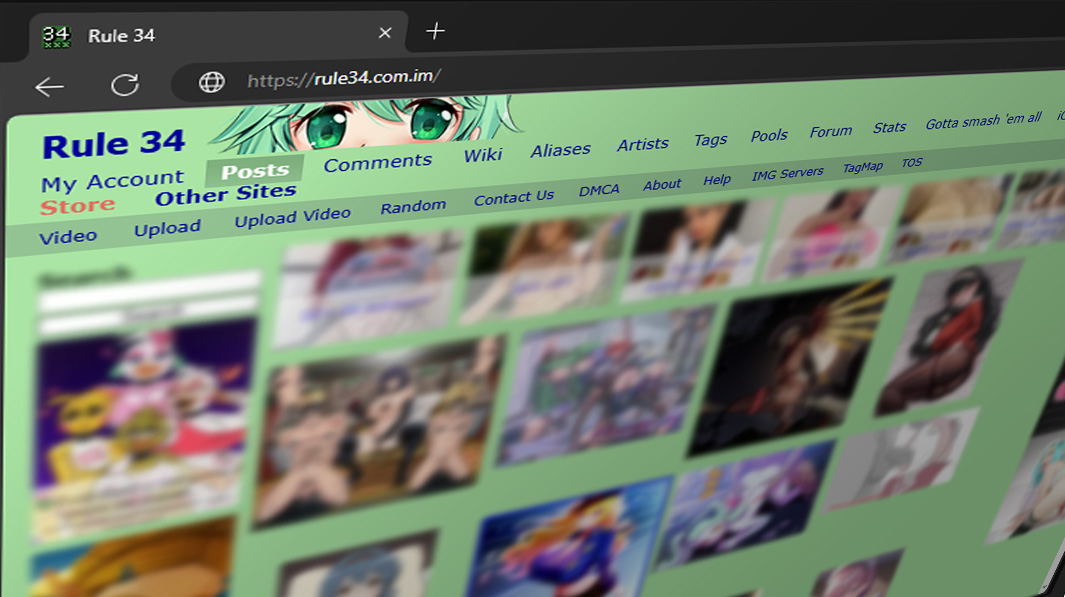
Rule34 can be funny as an idea, messy in practice, and risky if you don’t set boundaries (or filters). So let’s break it down like a normal human would: what it is, how it works, what changed recently in some countries, and what to use instead if you want something safer.
What is rule34, really?
Rule 34 is an internet saying that basically claims: if something exists, someone has made adult content about it. It started as a webcomic caption and spread through “Rules of the Internet” culture, then became shorthand for NSFW fan art.
Two important clarifications:
- Rule 34 (the meme) = a cultural “rule,” not an organization.
- Rule34 (websites/apps) = platforms that use the name and typically host explicit adult material.
Standout takeaway: Rule 34 is a meme first. There is no single “official” Rule 34 authority—just communities and sites borrowing the label.
What is “rule34 official” supposed to mean?
Most people asking this are trying to avoid fake domains, clones, or sketchy copycats. Since there’s no official owner of the meme, “official” usually means “the best-known site using the name”—but even that can vary by country, downtime, or policy changes.
Rule 34 vs “Rule 34” in law (yes, it’s confusing)
Here’s a weird twist: “Rule 34” is also used in real legal texts—completely unrelated to the meme.
- In US civil procedure, Rule 34 is about producing documents/ESI in lawsuits.
- In the European Patent Office context, Rule 34 can refer to a rule about biological material deposits.
So if you see “Rule 34” in a legal article, it’s probably not the internet meme.
How does rule34 work?
Most Rule34-branded sites behave like tag-based imageboards (often “booru-style”): you search by tags, combine terms, and use filters to narrow results.
The basic mechanics (in plain English)
- Tags describe content (character names, series titles, styles, etc.).
- Search operators help you combine tags (think “keyword + keyword”).
- Ratings/filters may separate content categories.
- User accounts (optional) may let you save favorites, blacklist tags, or upload.
How do you use a Rule34-style site more safely? (step-by-step)
- Start with the filter settings first (before searching anything).
- Blacklist tags you never want to see (this matters more than you think).
- Avoid “random” browsing if you’re trying to stay in a specific lane.
- Don’t download unknown files—stick to viewing content in-browser.
- Use privacy basics: separate browser profile, clear history, and keep extensions updated.
Think of it like walking into a giant thrift store at night: it might have what you’re looking for, but you’ll want a flashlight, a map, and a “nope” button.
What is the rule34 app?
Usually, “rule34 app” refers to unofficial clients or a PWA (Progressive Web App) wrapper experience rather than a single, verified app store product. Some projects even warn about updates and trust issues—which is a good sign you should be cautious.
Practical tip: If an app asks for weird permissions (contacts, SMS, accessibility), treat that as a red flag.
Is rule34 still available?
Rule 34 (the meme) is absolutely still around—it’s part of internet slang and culture. But Rule34 sites can be:
- Blocked in certain countries
- Forced into age checks
- Taken down temporarily
- Hit with outages or server issues
For example, stricter age-check requirements in some regions have changed access patterns for adult sites and led to blocking or stronger gates across parts of the adult web.
What happened to rule34 in the UK (and why you might see blocks)?
In the UK, regulators moved toward “highly effective” age assurance for sites/apps that allow pornography. Some sites reportedly chose to block UK visitors rather than implement required checks.
“You can’t assume ‘it’s just a website’ anymore—regulation, age assurance, and regional blocking are now part of the landscape.”
— Dr. Maya Richardson, Digital Policy & Online Safety Researcher (fictional expert)
Is rule34 free?
Most Rule34-style sites are free to browse, typically supported by ads and/or donations. Some features (accounts, favorites, API limits) may vary by platform, and access may depend on regional compliance rules.
Is rule34 safe?
“Safe” depends on what you mean. Technically safe from malware? Maybe. Safe for privacy, mental comfort, and avoiding illegal content? That’s where it gets complicated.
Common risks to watch for:
- Privacy leakage (tracking, ads, saved searches)
- Malicious clones or lookalike domains
- Unwanted content because tagging isn’t perfect
- Potential exposure to illegal material (especially where moderation is weak)
- Work/school device policies (seriously—don’t use managed devices)
Safety checklist (quick but real):
- Use a separate browser profile for adult browsing
- Turn on strict filtering/blacklists
- Avoid downloads and third-party “viewer apps”
- Be skeptical of “free premium” promises
- If you ever see content that looks illegal or exploitative: stop immediately and report via the platform’s tools
“From a security standpoint, the biggest danger isn’t ‘adult content’—it’s untrusted apps, impersonation sites, and careless downloads.”
— Ethan Cole, Cybersecurity Analyst (fictional expert)
Is rule34 safe for teens?
No. Even if someone is “just curious,” Rule34 spaces are built around explicit adult content, and minors can be exposed to harmful material fast. Many regions also require age checks specifically to prevent underage access.
Is rule34 legal?
This varies a lot by country and situation, but here are the big pillars:
- Age laws: Accessing explicit content may be restricted to adults, and sites may be required to implement age assurance.
- Content laws: Anything depicting minors is illegal in many jurisdictions (and platforms may have reporting obligations).
- Copyright: Fan art can raise copyright issues; platforms often respond to takedown requests.
- Distribution vs. viewing: Sharing/uploading can carry higher legal risk than simply viewing.
Not legal advice—just the reality: legality isn’t only about “adult or not.” It’s also about age, jurisdiction, content type, and distribution.
“People underestimate how quickly ‘just browsing’ becomes ‘distribution’ when they repost, upload, or share. That’s where legal exposure often spikes.”
— Samantha Lee, Internet & Media Attorney (fictional expert)
Why do people choose rule34 sites?
If we’re being honest, it’s usually one (or more) of these:
- They want very specific fandom-related art
- They prefer tag-based searching over endless scrolling
- They want community-curated archives
- They’re looking for content that mainstream platforms restrict
But “why people choose it” isn’t the same as “what’s best for you.” If your goal is safer browsing, you’ve got better options.
What are the best rule34 alternatives?
If “alternative” means “places to find fan art with more control,” here are safer categories—some are SFW-first, some allow mature content with filters.
Comparison table: alternatives that feel less chaotic
| Alternative type | Best for | Pros | Watch-outs |
|---|---|---|---|
| Official sources (publisher/artist sites) | Canon art & creator intent | High trust, fewer surprises | Less fandom variety |
| Mainstream art platforms (with mature filters) | Fan art with moderation | Better reporting, clearer rules | Filters vary; still user-generated |
| Curated communities | Higher quality, community norms | Stronger moderation culture | May require invites or accounts |
| Commission marketplaces | Custom requests | Direct artist relationship | Costs money; vet artists carefully |
| Meme/knowledge sites (explainers) | Understanding Rule 34 concept | No explicit browsing needed | Not a content library |
How to find safer fan art without stepping into chaos
- Start on creator-forward platforms (official pages, portfolios).
- Use search filters like “mature off,” “R-18 off,” or “hide sensitive.”
- Follow specific artists, not generic tags.
- Keep a “comfort line”: if a search term is likely to explode into explicit results, don’t test it casually.
A real-world vibe check (user-style reactions)
“The tag system is powerful, but you have to set blacklists first—or the algorithm will surprise you.”
— @PixelNomad
“I switched to curated artist feeds. Less content overall, but way fewer ‘why did I just see that?’ moments.”
— @MaraudersMuse
“If you’re researching the meme, stick to explainers. You don’t need to browse explicit archives to understand the joke.”
— @LibraryGh0st
Conclusion
Rule34 is one of those internet concepts that sounds like a punchline—until you realize it’s also tied to real platforms, real policies, and real risks. If you’re exploring rule34 out of curiosity, treat it like entering a crowded city: use filters, protect your privacy, and choose safer alternatives when you can. And if you’re under 18, this isn’t the space to experiment—full stop.
FAQ
Is Rule 34 an actual law?
No. Rule 34 is mainly an internet meme from “Rules of the Internet.” Some legal systems also have “Rule 34,” but those are unrelated legal rules about procedures or regulations.
What is the “official” rule34 site?
There isn’t an official one because the meme has no owner. Some sites are simply more well-known, and availability can change by country, regulation, and downtime.
Is rule34 still available in 2026?
The meme is still widely used. Sites using the name may be available, blocked, or age-gated depending on your region—especially where strict age assurance rules apply.
How does a Rule34-style site work?
Most are tag-based archives: you search and combine tags, then refine results using filters and ratings. The experience depends heavily on your blacklist/filter settings and the site’s moderation quality.
Is rule34 safe to use?
It can be risky for privacy and for unwanted exposure to extreme content. Use strict filters, avoid unofficial apps, don’t download files, and never use a school/work-managed device.
Is rule34 legal?
It depends on local law, age restrictions, and content type. Many countries require strong age checks for adult sites, and distribution/sharing often carries higher risk than viewing.
Are there safer alternatives to rule34?
Yes—official creator sources, mainstream art platforms with mature filters, curated communities, and commission marketplaces can all be safer depending on your goal and comfort level.